BESPOKE CASES · PARIS

Case-making House for Instruments & Heritage
Design · Protect · Preserve
Craftsmanship

Understand the Instrument Before Protecting It.

Every case begins with an intelligence of design—conceived, balanced and drawn for a single piece. Only then does fabrication begin.
The Intelligence of Design

Understand Before You Build.

Every instrument has its own balance, tensions and points of fragility. Before cutting a single material or drawing a pattern, Victor observes. He listens to the object to be protected—its geometry, its sensitive areas, its individual constraints. Protection begins long before fabrication.

01

Observe

Every curve, every imbalance, every distinctive feature—studied with care.

02

Understand
Identify points of fragility, areas of tension and singular proportions.

03

Imagine
The structure takes shape in the mind before it exists in material.

04

Balance
Distribute loads. Support without constraining. Hold without applying pressure.

05

Design
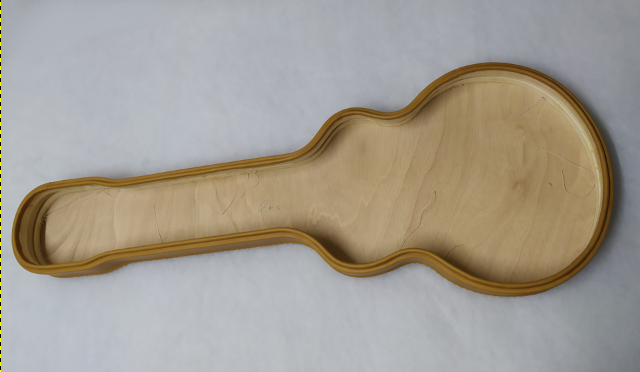
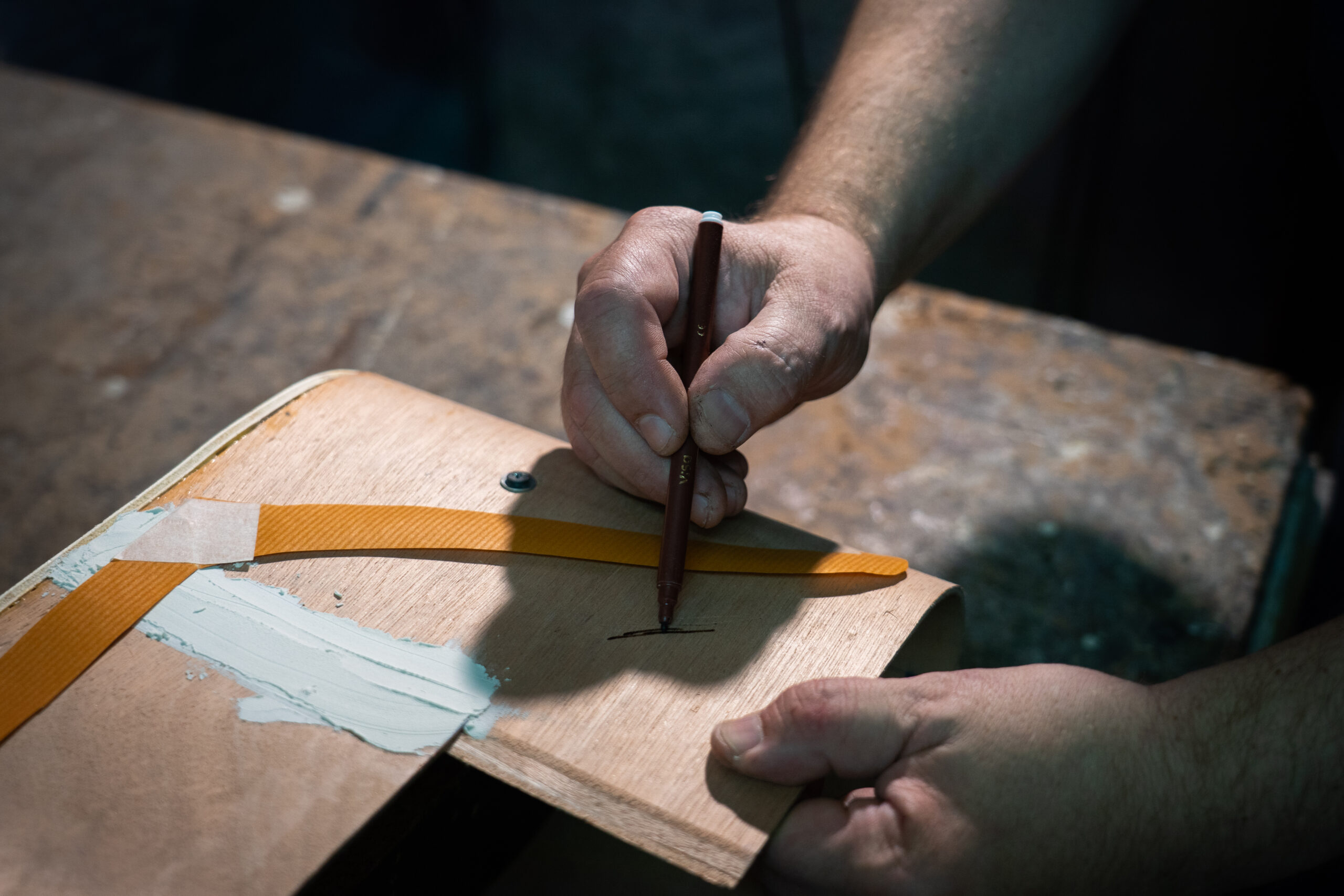
The instrument’s tracing becomes the matrix. A one-time mould.

06

Build
Fabrication is not the beginning of the work—it is its culmination.
A Craft That Has Become Rare

The Gesture as an Extension of Thought.

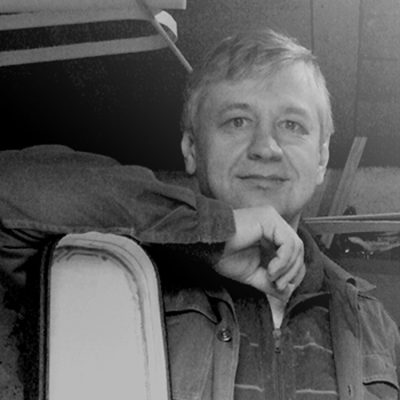
Trained in Saint Petersburg and based in Paris since 2011, Victor perpetuates a craft of uncompromising standards. Few electrical tools. An intimate knowledge of living materials. Tools often designed and made by his own hand. Every gesture extends the thought that came before it.

“It takes approximately forty hours to make a single violin case. This time is not a cost—it is a guarantee of preservation.”

Victor Vorko
The Sequence of Gestures
Structure
Cutting the case and lid
Shaping the forms
Planing & refining
Gluing the strips
Adjusting the joints
Assembly
Bonding
Fitting & riveting
Exterior Covering
Cleaning the joints
Fixage
Interior Covering
Cutting velvet & padding
Gluing the velvet
Crafting the supports
Pockets & interior architecture
Making the straps
Finishing
Final adjustment
Polishing
Inspection
Saddle stitching, if requested
And sometimes one step more—because that is what the instrument requires.
The Method

No Template.
Every Drawing
Is a First.

Victor Vorko never works from an existing template. He begins with the precise tracing of the instrument and creates a one-time mould, intended to disappear once the case is complete.

From the very beginning, every detail is designed with longevity in mind: ease of handling, perfect support and long-term preservation.

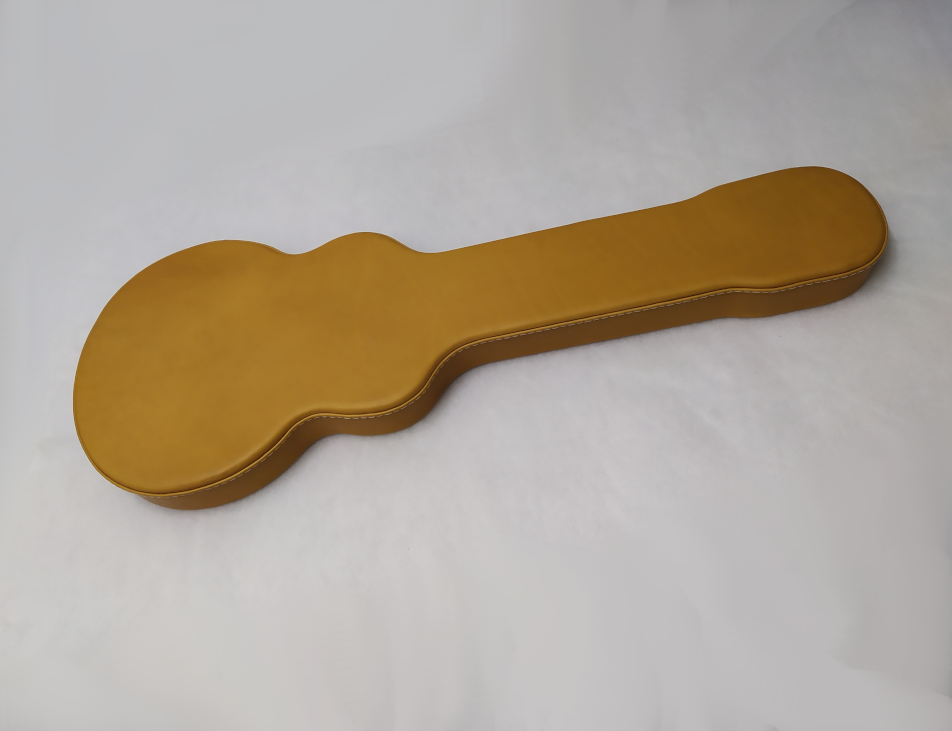
Unlike standardised industrial cases, every Victor Vorko creation is a singular response to a singular requirement.
A perfectly supported instrument can endure through time intact.
Complex & Unconventional Forms

Every Instrument Calls for Its Own Architecture.

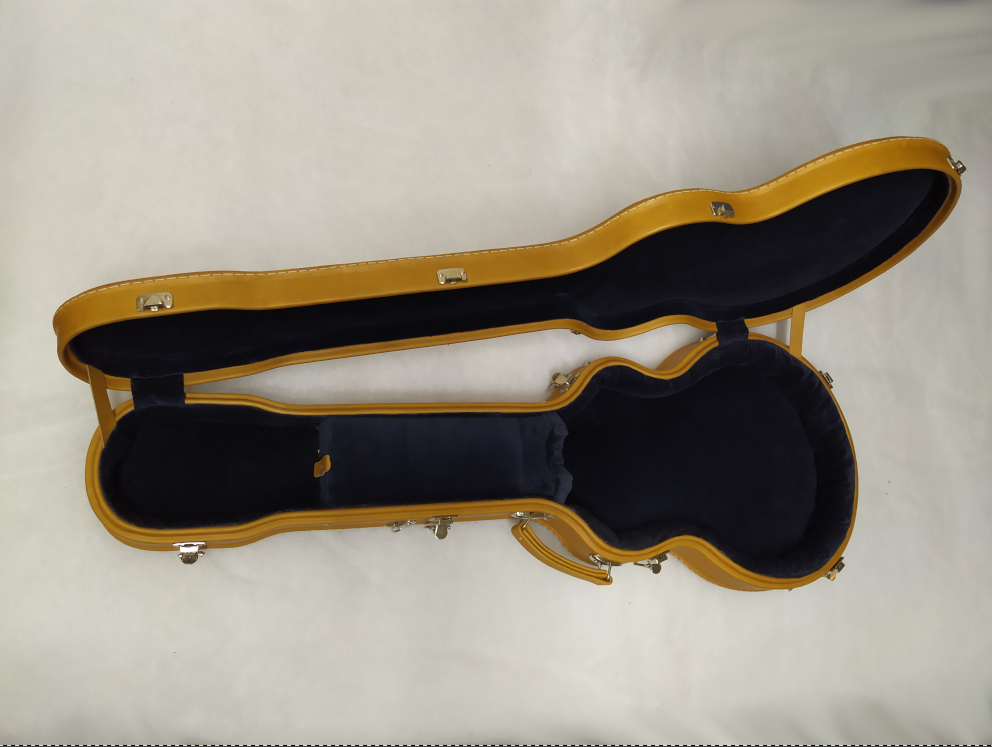
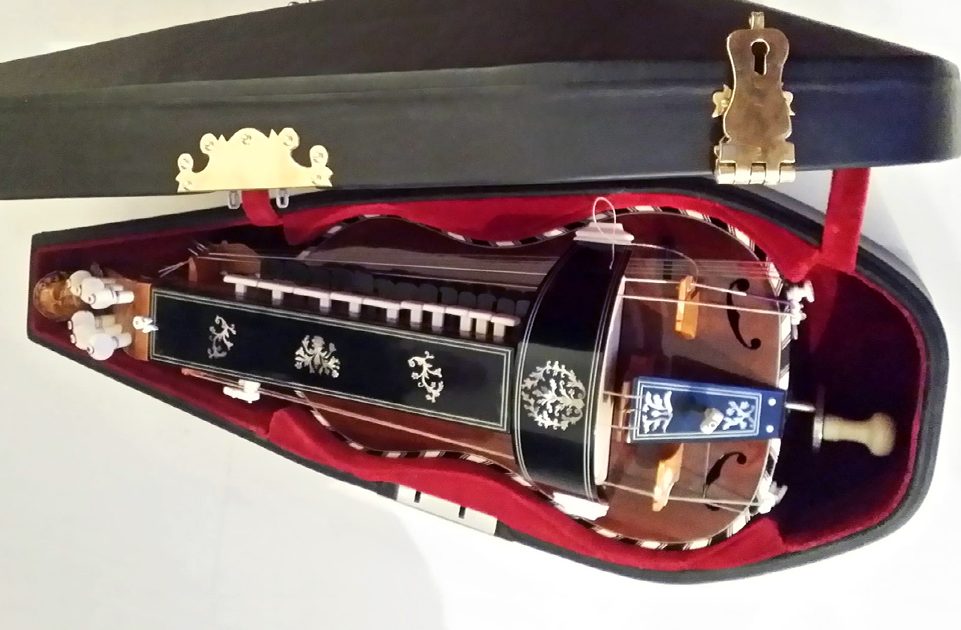
Theorbos, eighteen-string guitars, electric or double-neck violins, mandolins, orpharions. For more than thirty years, Victor Vorko has designed interior supports that distribute pressure points with precision and follow every silhouette without ever constraining the instrument.

A Unique Case
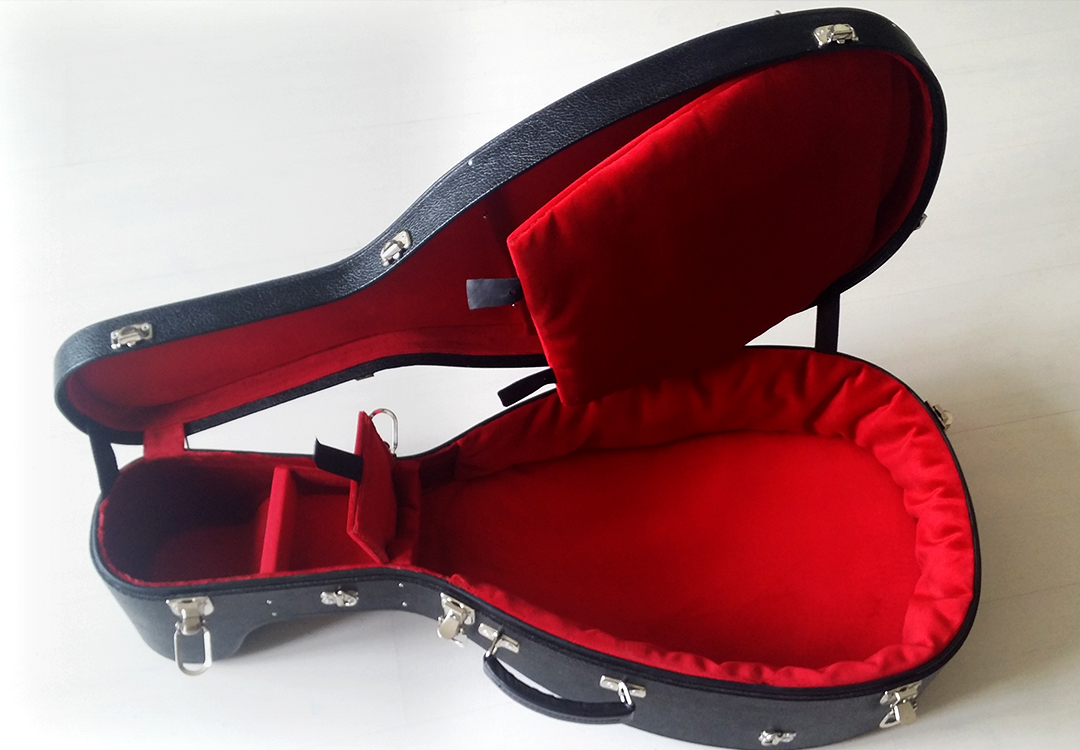
BESPOKE INTERIOR SUPPORT
UNCONVENTIONAL FORM
The Intelligence of Materials

No Material Is Decorative by Chance.

Every material has its own qualities of protection, breathability and ageing. Victor selects wood, coverings and interior materials as much for their aesthetic qualities as for their ability to preserve the entrusted object over time.
Velvets absorb micro-vibrations. Wooden structures naturally contribute to thermal insulation. Every interior surface is selected according to the fragility and specific requirements of the object being protected.
Time lends character to noble materials without compromising them.
Climate Stability

The Case as a Conservation Environment.

Musical instruments are particularly sensitive to changes in temperature, humidity and air movement. Sudden changes can cause tension, deformation and cracking. To preserve an instrument is also to preserve the environment in which it rests.
— Insulation
Wood, a Natural Insulator
The wooden structure naturally acts as a thermal insulator, helping maintain a stable and protective interior environment.
— Airtightness
Precisely Fitted Wooden Strips
The closing system, based on a precisely fitted wooden strip, limits air exchange when the case is opened.
— Microclimate
Designed Stability
When closed, the case limits air infiltration. This stability is essential during transportation and changes of environment.
— Preservation
Protection Over Time
Every design decision is made so that, ten or fifty years from now, the instrument can return to exactly the condition in which it was entrusted.
The Art of Detail & Precision

What Remains Unseen Reveals Everything Else.

The final hours of fabrication are often devoted to what will never be seen: adjusting, refining, cleaning and checking. That is precisely where craftsmanship reveals itself.
— Glides
Floor Protection
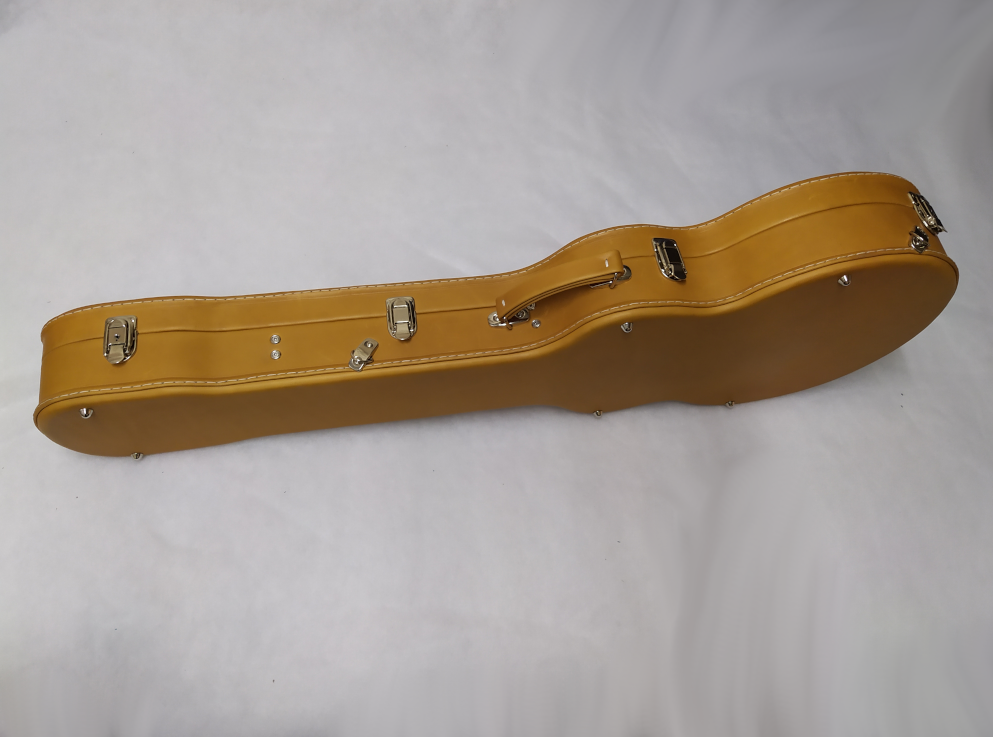
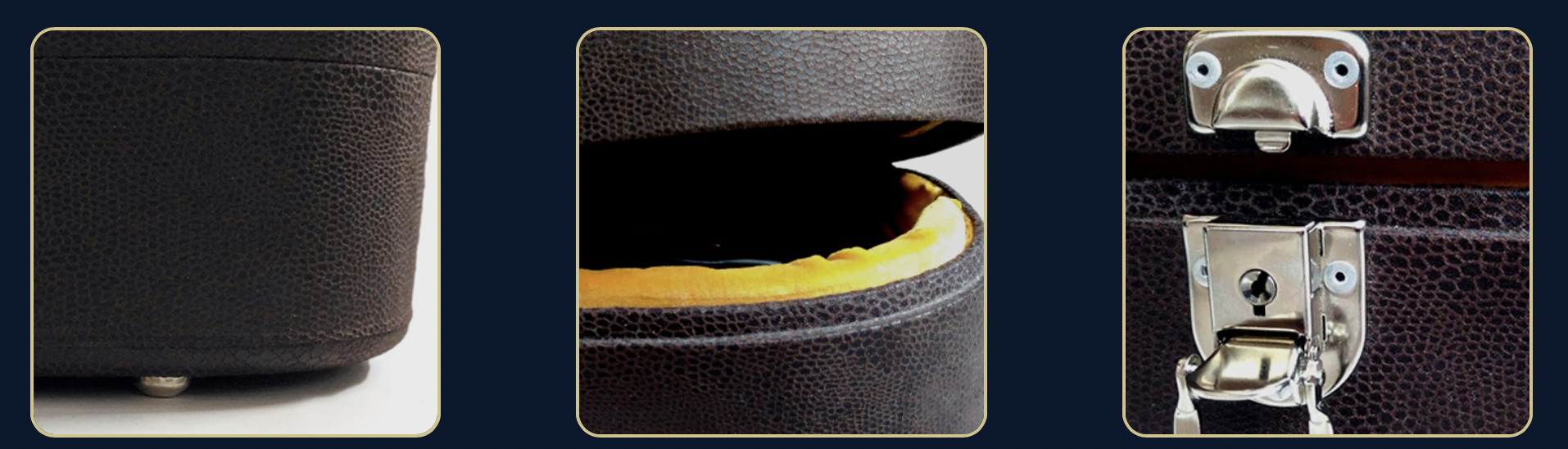
A glide system protects the case when placed on the floor, preserving both the exterior material and the object within.
— Closure
Interior Wooden Strips
Handcrafted and discreet, they provide a highly effective seal. This system requires many hours of refinement.
— Hardware
Selected Clasps & Rivets
Every metal component is chosen for its strength and refinement. The hardware reflects the quality of the whole.
— Fitting
The Infinitesimal
A tenth of a millimetre can make the difference between perfect support and unwanted pressure. Fitting is the final stage, and one of the most decisive.
Signature of Excellence

The Saddle Stitch, the Maison's Signature

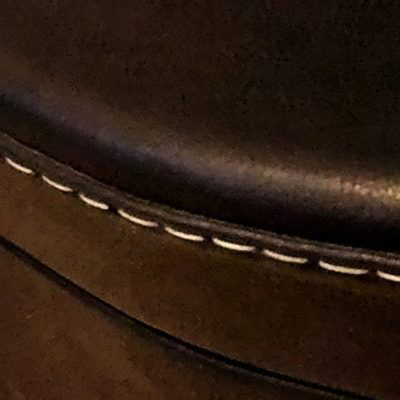
Executed by hand using the traditional saddle-stitch technique, with two needles, every seam is made with absolute precision. It combines elegance, strength and durability, even in the most discreet details.

Every stitch is made with the same exacting standards, right to the very last.

Available on request, by order.

This is a title

The Invisible

One Standard. Three Expressions.

I

The Time of the Gesture
Dozens of hours of manual work. Every adjustment, every curve and every finish is completed patiently—in service of an elegance that may not be seen, but can be felt.
II
Invisible Excellence
The most discreet finishes are often the most demanding. Every stitch, every tension and every interior adjustment is completed by hand. This work disappears when the case closes.

III

Rare Craftsmanship
A demanding craft, far removed from standardised production. Every piece is made individually, according to the specific requirements of the instrument it protects.
ONE CRAFTSMAN

Every Drawing, Every Adjustment, Every Stitch, By a Single Hand.

For more than thirty years, Victor has adapted every gesture to the instrument he protects. No gesture is repetitive. No stage is standardised. Every case is made entirely by a single pair of hands, with the time and precision required by each bespoke creation.

The story of your case begins here.